
It’s gone eleven and the house is quiet in the way that isn’t peaceful. Your partner’s asleep, or pretending to be. You’re on your phone with the brightness turned right down, not because anyone would judge you for searching “why don’t we have sex anymore” or “sexless marriage help”, but because typing it out, even to Google, makes something real that’s been easier to leave unnamed.
If that’s roughly where you are, you’re not alone, and you’re less unusual than it feels at midnight. Across the UK, more people are typing some version of relationship coach UK into a search bar every month, not because their relationship has fallen apart, but because it’s gone flat in a way that talking it through over dinner hasn’t fixed. This piece, written by somatic intimacy coach Andre Lazarus of Coming Closer, explains what’s actually driving that shift in 2025, how coaching differs from couples therapy, what somatic coaching involves in practice, and how to work out whether it’s the right next step for you.
Why Relationship Coach UK Searches Are Rising in 2025
Something has genuinely shifted in how UK couples think about getting help. In 2024, just under half of UK adults, 49.5%, were married or in a civil partnership, continuing a decade long decline from 51.5% in 2014 (ONS). Marriage hasn’t disappeared, but it’s no longer the default frame people build a relationship inside, and that changes what “getting help” means. It’s less about crisis intervention and more about maintenance, closer to how people now think about a personal trainer than a last resort.
The economics matter too. Years of a cost of living crisis have squeezed the time and headspace couples have for each other, and financial stress is one of the most consistent predictors of relationship strain that researchers track. At the same time, attitudes toward getting support have loosened considerably. BACP’s Public Perceptions Survey found nearly a third of UK adults, 30%, had been in some form of talking therapy in the past year, with three in four describing it as helpful (BACP). Relationship coach UK isn’t a niche search term anymore. It sits alongside the same wellness economy instincts that made therapy, yoga and nervous system regulation part of everyday vocabulary rather than fringe interests.
Access plays a part as well. Relate, the UK’s largest relationship support charity, has found that nearly one in five people, around 2.87 million, are in relationships researchers would classify as distressed, against a landscape where there’s roughly one trained couple therapist for every 21,500 people in the country (Relate, cited by Tavistock Relationships). NHS waiting lists for talking therapy remain long, and psychosexual therapy in particular is scarce on the NHS. Coaching has filled part of that gap: faster to start, more flexible in format, and for many couples, a lower threshold first step than committing to open ended therapy.
Some of this sits inside a wider pattern commentators have started calling a relationship recession, echoing the earlier conversation around a “sex recession” among younger adults, and running alongside trends like Generation Single and the slower rebuilding of social and dating life in the years since the pandemic. None of this means coaching has replaced therapy. It means more couples are asking a genuinely useful question earlier, and treating relationship health as something worth preventive relationship work rather than only fixing once it breaks: what kind of support actually fits what we’re dealing with?
Relationship Coach vs Couples Therapist: What’s the Actual Difference?
A relationship coach and a couples therapist both help partners through difficulty, but they work from different scopes. A couples therapist, often BACP accredited or COSRT registered for psychosexual work, is trained to work with clinical patterns, including trauma, within a regulated framework. A relationship coach works in a more present focused, action forward way, helping functioning couples build skills and rebuild connection without treating a clinical condition.
The line matters most in one direction. If there’s active abuse, untreated mental illness, addiction, or trauma needing clinical care, a BACP accredited counsellor or a COSRT registered psychosexual therapist is the right first call, not a coach, and an honest coach will say so directly rather than take the work on regardless. For couples who are fundamentally solid, functioning well everywhere else in life but stuck on one pattern, whether that’s a Gottman style stonewalling loop, a widening gap in desire, or a quiet drift into being co-managers of a household rather than partners, coaching tends to move faster, because it isn’t diagnosing a disorder. It’s building a skill and unsticking a pattern.
Frameworks like the Gottman Method, built on John and Julie Gottman’s research into what they call the Four Horsemen of criticism, contempt, defensiveness and stonewalling, Emotionally Focused Therapy, and Imago Relationship Therapy, developed by Harville Hendrix, all sit somewhere between the two worlds, and pieces of each show up in good coaching as well as good therapy. What differs isn’t always the theory behind the work. It’s the regulation, the scope, and whether the goal is treatment or growth.
What Somatic Relationship Coaching Actually Involves
This is where curiosity often turns into hesitation, because somatic coaching is a term people meet online without ever seeing what actually happens in a session. Here’s the plain version.
Somatic work starts from a premise that’s well established in trauma research: the body holds patterns that talking alone doesn’t always reach. You can understand your attachment style perfectly, in your head, and still find your nervous system doing the same thing it’s always done the moment things get emotionally real, going quiet, going defensive, or checking out entirely. Somatic Experiencing and related nervous system regulation approaches, grounded in polyvagal theory, work with that gap directly, slowing things down enough to notice what’s actually happening in the body before, during and after a hard conversation, rather than only analysing it afterwards.
In a Coming Closer session, that looks like a mix of guided conversation, breathwork, and body based awareness exercises, at whatever pace feels safe, with an explicit and ongoing invitation to consent rather than a one off agreement at the start. This draws on the Wheel of Consent, developed by Betty Martin, which treats every part of an interaction as a choice both people are actively making, not something one partner is doing to or for the other. The aim across all of it is greater embodiment and presence, rather than performance, which is really what most couples are asking for even when they describe the problem in more clinical terms.
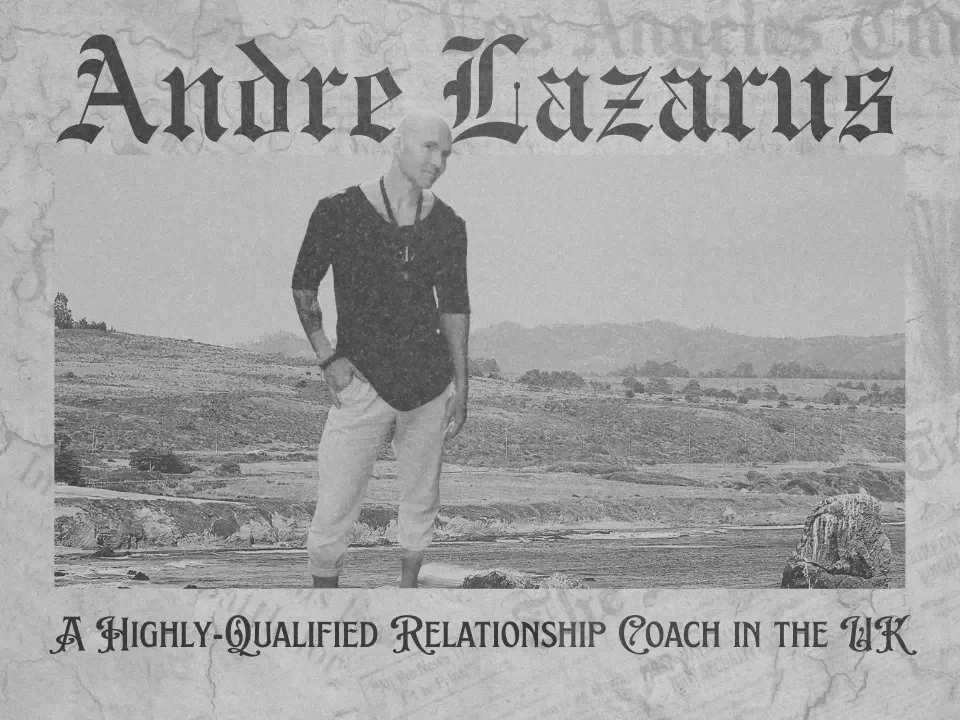
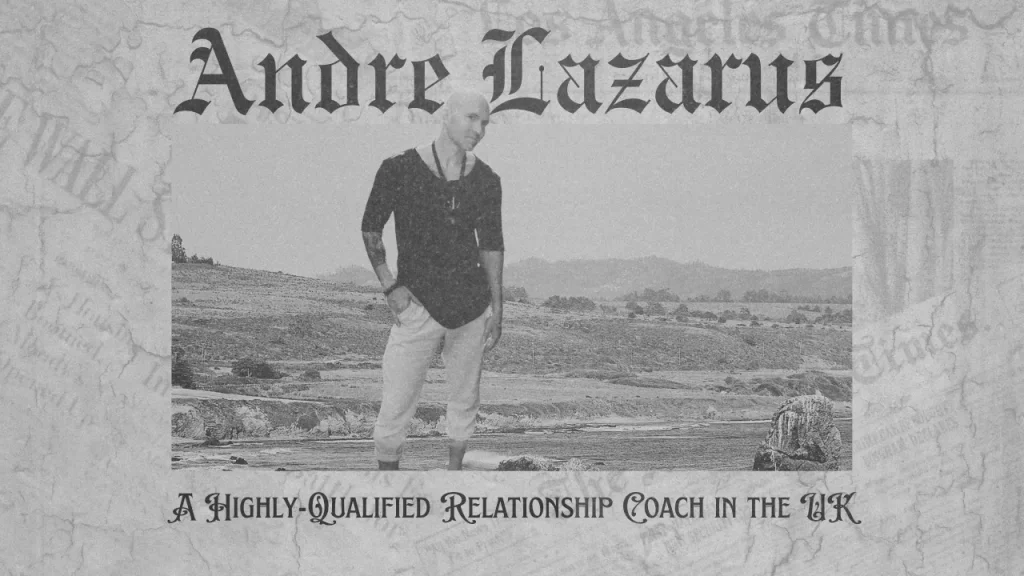
Andre Lazarus trained through the Somatica Institute, the method founded by Dr Danielle Harel and Celeste Hirschman that also underpins the somatic work shown on Channel 4’s Virgin Island, where Andre appeared as a practising surrogate partner therapist under professional supervision. That’s a useful thing to know before booking anything: the approach is not improvised or branded self-help, it comes from a specific, documented lineage, and it’s worth checking any practitioner’s training the same way. Sessions can run individually or as a couple, online or in person, and nothing physical happens without it being named, agreed, and revisited as the work continues. You can read more about Andre’s own training and background on his about my work page.
The Problems Couples Actually Bring to Coaching
Strip away the jargon and the reasons couples actually book a call are specific, not abstract. The dead bedroom, where sex has quietly stopped without either person deciding it should. Mismatched libido or low desire on one side, often mistaken for a lack of attraction rather than what it usually is: stress, disconnection, or a nervous system that’s stopped feeling safe enough to want anything. The roommate phase, where two people run a household well together, co-managing the calendar, the kids and the finances, and end up feeling like colleagues rather than partners. Emotional distance that built up so gradually neither person can point to the week it started. A sleep divorce that quietly became permanent. Resentment that’s calcified because the same argument keeps looping without resolution, closer to a Gottman style communication breakdown than a single fight worth having out.
Some couples arrive with a more specific trigger: performance anxiety, one partner wanting an open relationship and the other feeling terrified of what that means, or the aftershock of a bruising situationship, or a stretch of dating app fatigue before they got together, still quietly shaping how one of them shows up now. Others are dealing with a defined event: an affair, a health diagnosis, or a baby that changed everything about how the relationship runs day to day.
What almost all of them share is the same private fear, that naming the problem out loud will make it worse, or make them look broken to the person meant to help. In practice, naming it plainly is usually the first relief a couple gets. There’s a name for the pattern, and it’s common enough that a coach has seen it many times before. If you’re not sure whether any of this describes you, it’s worth reading through the specific signs Coming Closer works with before booking anything.
Does Relationship Coaching Actually Work?
The honest answer is that outcomes depend heavily on fit, both to the couple’s actual problem and to the coach’s specific training. Where research exists, it’s encouraging. Tavistock Relationships, one of the UK’s leading couple therapy bodies, reports that 60 to 70% of couples who complete therapy see a measurable improvement in relationship quality, and while that figure is for therapy rather than coaching specifically, the underlying mechanism is similar: structured, skilled outside support beats trying to resolve an entrenched pattern alone.
There’s a longer view worth holding onto as well. The Harvard Study of Adult Development, the longest running study of adult life ever conducted, has tracked participants since 1938 and found consistently that the strength of people’s close relationships is the single biggest predictor of health and happiness later in life, ahead of income, career success or fame. That’s not a reason to panic about a rough patch. It’s a reason to take a stuck pattern seriously rather than assume it resolves on its own, because the cost of staying stuck is rarely just this year. It’s another year of a quiet house, and for some couples, the slow drift toward separation that no fault divorce, introduced in England and Wales in 2022, has made procedurally simpler but no less painful to live through.
Reaching out isn’t an admission that something is wrong with you. It’s closer to what writers like Esther Perel and Emily Nagoski have both argued in their own ways, that desire and connection aren’t fixed traits a couple either has or doesn’t. They’re something to be actively tended, the same as anything else worth keeping alive.
Choosing a Relationship Coach in the UK: Cost, Format and What to Check
Cost varies widely by format and credentials. For comparison, Relate offers sliding scale sessions from roughly £20 to £90, Tavistock Relationships works on a means tested sliding scale with no minimum fee, and independent somatic or intimacy coaching, including packages at Coming Closer, tends to sit at a different price point that reflects longer sessions and more individualised, experiential work than a standard fifty minute clinical hour. It’s worth asking any coach directly what a single session costs, what a package includes, and whether sessions run online, in person, or both. Andre works with clients across the UK and in Spain, in person and online, and offers a reduced rate for military veterans in recognition of his own service background.
A few honest questions are worth asking before booking anything. What’s your training, and is it verifiable? Somatica® and IPSA certifications, for instance, are checkable against public registers, not just claimed on a website. What actually happens in a session, physically? Is there a clear consent framework? What’s your scope, and when would you refer us elsewhere instead? A practitioner who answers these plainly, before you’ve had to ask twice, is generally a good sign.
Andre also runs individual tracks alongside couples work, including coaching for women reconnecting with desire and the body, for people who’d rather start on their own, before or instead of bringing a partner in.
Partner buy-in matters more than people expect. It’s common for one partner to be ready well before the other. Rather than forcing the issue, a low pressure first step, listening to a podcast episode together or reading about how the work actually runs, often brings a hesitant partner along faster than any amount of persuading.
Frequently Asked Questions

Is a relationship coach the same as a couples therapist?
No. A relationship coach works with functioning couples on communication, connection and specific patterns, while a couples therapist, usually BACP accredited or COSRT registered, is trained to treat clinical issues, including trauma, within a regulated framework.
How much does relationship coaching cost in the UK?
Costs vary by provider and format. Charity options such as Relate offer sliding scale sessions from around £20 to £90, while independent somatic or intimacy coaching packages are typically priced separately to reflect longer, more experiential sessions.
What is somatic relationship coaching?
Somatic coaching works with the body’s nervous system responses, not conversation alone, using approaches such as Somatic Experiencing and consent based frameworks to help couples shift patterns that talking hasn’t resolved on its own.
Can we start relationship coaching if only one partner is ready?
Yes. Many people begin individually, working through their own patterns before or instead of bringing a partner in, and that alone can shift the dynamic between them.
Is relationship coaching confidential?
Reputable coaches follow clear confidentiality and consent practices, though coaching sits outside the statutory regulation that governs licensed therapy, so it’s worth asking any provider directly how they handle privacy.
The Real Shift Behind the Search
None of this requires a crisis to justify it. Choosing to work on a relationship while it’s still fundamentally good, rather than waiting until it isn’t, has more in common with becoming the kind of couple who does this work than with admitting the two of you have failed at something. That’s the real shift behind the rise in relationship coach UK searches in 2025: less shame, more maintenance, and a growing willingness to get outside support for the one part of life that’s supposed to matter most.
If any of this sounds like where you are, a free discovery call is a low pressure way to find out whether somatic intimacy coaching is the right fit. It’s one honest conversation, not a commitment to fix everything at once.
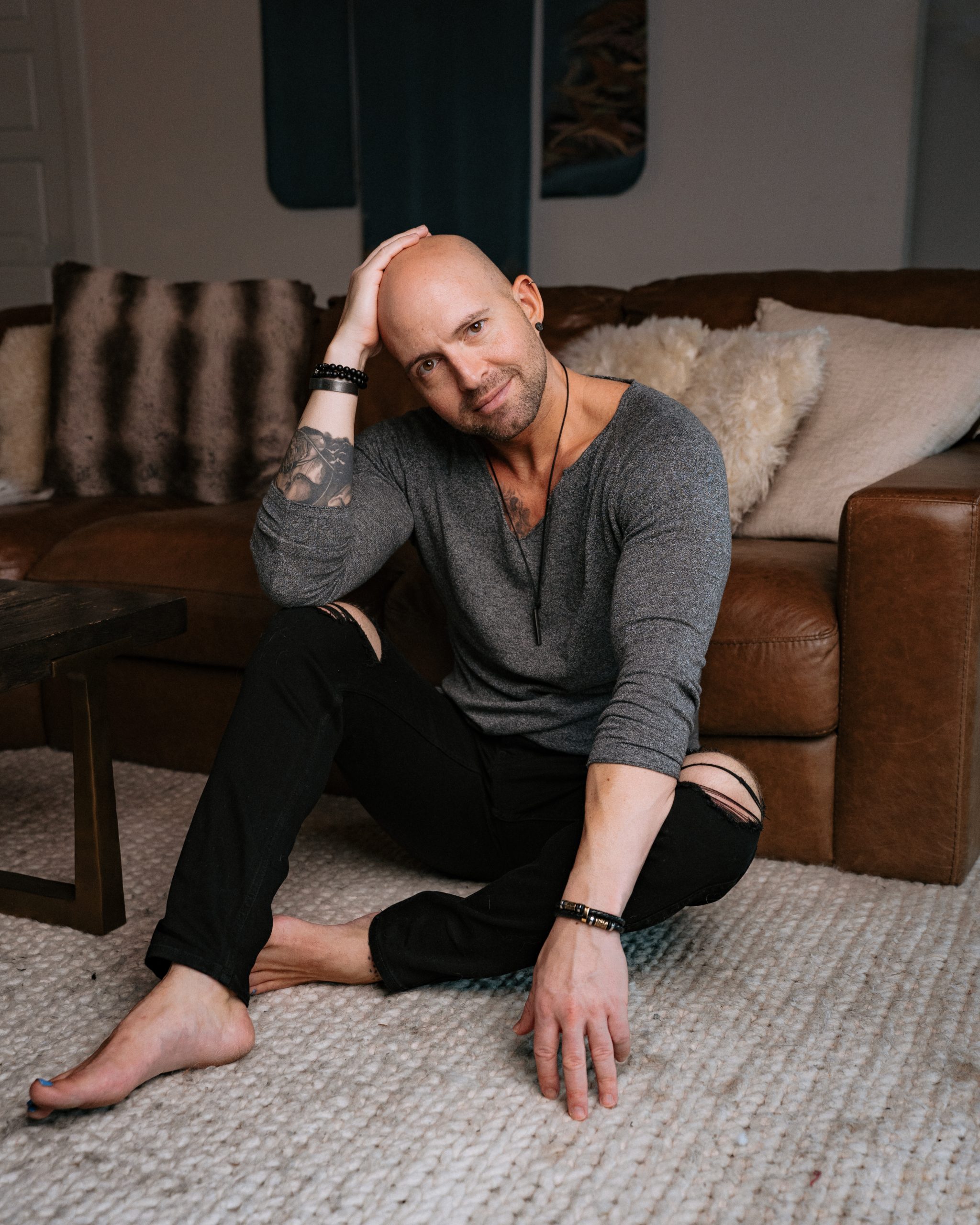
Andre Lazarus is a Certified Intimacy, Sex and Relationship Guide, trained Surrogate Partner, as well as Sacred Intimate with 9+ years of experience helping individuals and couples discover their intimate and erotic power. Andre specializes in erotic desire, sexless relationships, sexual trauma healing, erectile concerns, rapid ejaculation, BDSM, consensual non-monogamy, and more.
Book a discovery call and enroll into my courses to discover a deeper connection to yourself and your partner!